
Essex Research School - Literacy Focus Update
.png)
This term our literacy priority has championed evidence-informed practice across schools, emphasising reading as a whole-school responsibility, developing disciplinary literacy in every subject, and innovating how spelling is taught in Key Stage 3.
Making Spelling Visible in Key Stage 3: Early Insights from Spell It Like It Is
 Essex Research School is nearly halfway through an Early-Stage Programme Development (ESPD) pilot with the Education Endowment Foundation, working with six schools across Essex and the eastern region.
Our 'Spell It Like It Is' project is making spelling visible in Key Stage 3 classrooms. Read our early insights, what we’re learning about implementation, and our ambitions for the next phase of development here.
Levelling the Playing Field: Whole-School Strategies for Reading Success
In secondary schools today, unequal access to the curriculum often stems from gaps in students’ reading skills. ‘In Levelling the Playing Field: Whole-School Strategies for Reading Success’, Sarah-Louise Johnston, Director of Essex Research School, argues that literacy must be a shared responsibility across all subjects, not just English, to ensure every learner can access the full curriculum and achieve their potential.

Drawing on evidence from the Education Endowment Foundation 'Improving Literacy in Secondary Schools' guidance, the article outlines how explicitly teaching reading comprehension strategies, selecting and sequencing complex texts, and embedding literacy practices across departments can close the disadvantage gap and improve outcomes for all pupils. If your school is committed to equity and academic success, this whole-school approach to reading will resonate.
Read the full article here.
Better Reading, Better Teaching, Better Learning
Good literacy isn’t just the domain of English departments, it’s the backbone of every subject. When teachers have the skills to support students’ reading within their own disciplines, both teaching and learning improve. That’s the core message of this new piece from Essex Research School.
Read the full article here: RS Network | Better Reading, Better Teaching, Better Learning
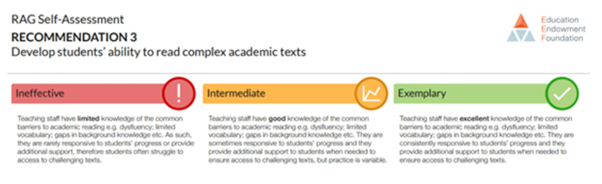
What Pupils Learn When We Show Our Thinking
I've always believed that modelling isn’t just about showing pupils what to do, it’s about revealing the why and how behind expert thinking.
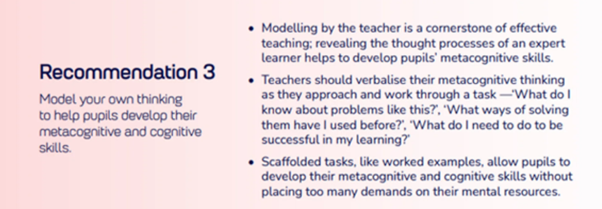
This new piece from Essex Research School's ELE (Evidence Lead in Education) Vanessa Sullivan, is a brilliant reminder of the power of explicitly sharing our reasoning with students.
When we verbalise our thought processes, we:
✅ Strengthen pupils’ metacognition
✅ Build their confidence in tackling challenging tasks
✅ Help them see that learning is a process, not a performance
✅ Make expert strategies transparent and transferable
If you’re interested in how to adopt effective modelling in your classroom, this article is well worth a read.
You can read the full article here.
Questioning: Instructional Mistakes and Misconceptions
Discover why simply asking lots of questions isn’t enough! This article from our ELE, Susan Marbe, dismantles common instructional myths about questioning, shows how expert teachers use purposeful prompts to reveal and correct misconceptions, and offers practical, research-informed strategies to deepen student thinking and strengthen learning outcomes. Want to know more? Click here.

Upcoming Essex Research School Event
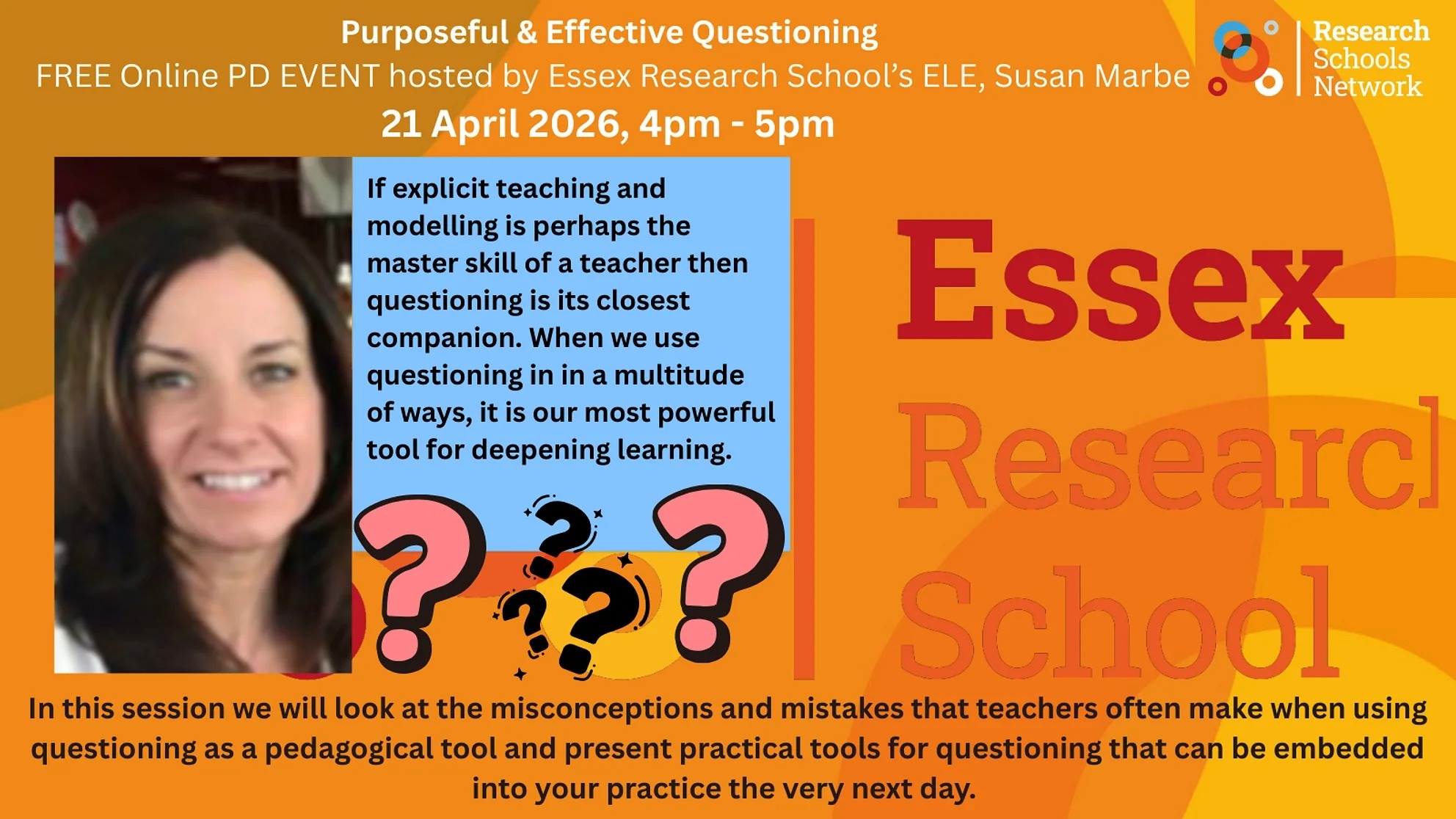
Free online webinar: Purposeful and Effective Questioning
📅 Tuesday 21 April 2026 | 🕓 4:00–5:00 PM | 💻 Online
Sign-up here
Join Susan Marbe (ELE, West Essex SCITT Director, DfE Quality Associate) for a focused session on Effective Questioning, grounded in EEF guidance on Metacognition and Teacher Feedback. Explore how deliberate questioning strengthens planning, monitoring, evaluation, and feedback. Gain practical, evidence-aligned strategies to deepen learning, avoid common pitfalls, and enhance classroom dialogue and self-regulation.
Don’t want to miss the next part in the series?
Sign up for Essex Research School’s half-termly newsletter here. This will let you know of any new blog updates as well as upcoming events and resources published by the EEF and wider Research School Network.